Home Sellers
Is now a good time to sell while home sales are slowing?
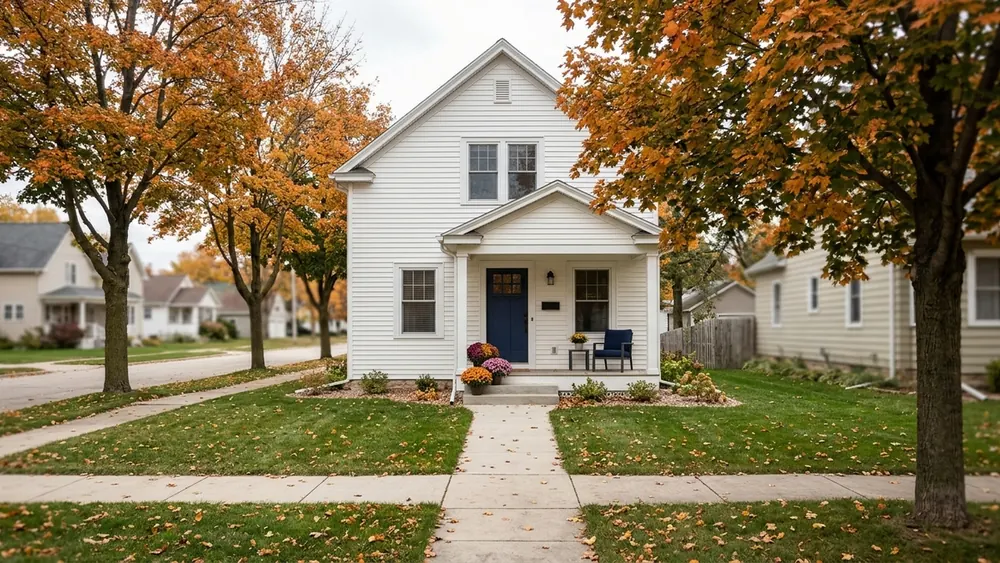
If you’ve seen headlines saying “home sales are slowing down,” you may be wondering whether now is a good time to sell.
On this page
The answer deserves more context than a headline. A slower market is not a stopped market—and national statistics don’t necessarily describe what’s happening in your neighborhood. The key is perspective: understanding how much activity is still taking place, what’s motivating buyers, and how your home fits into your local market.
What the Numbers Actually Tell Us
According to the National Association of Realtors’ September 2026 existing-home sales report, sales increased 1.5% from August but were down 2.2% compared with September of 2025. In other words, sales can rise month to month while still trailing the previous year. Both statements can be true. NAR
And don’t forget that real estate is local. National trends are the picture of the US as a whole! In WI, our market looks different. Here, sales from January through October in 2026 were up from last year in the same time frame: 1941 vs 1835 in 2025.
That’s why it pays to ask: “Slowing” compared with when? Last month? Last year? The unusually competitive pandemic-era (2021) market?
Local conditions matter. NAR notes that individual markets can remain active even during traditionally slower periods because of regional economic conditions and other local factors. A national headline can give a useful background, but it isn’t an assessment of your home’s selling prospects. NAR
Nearly 4 Million Sales Is Still a Lot of Movement
NAR reported a seasonally adjusted annual sales pace of 3.99 million existing homes in September. That figure describes what a full year would look like if that month’s adjusted pace continued for 12 months; it is not a prediction of the final annual total.NAR
To put that pace into everyday terms, it works out to approximately:
- 10,900 existing-home sales per day.
- 455 sales per hour.
- Nearly 8 sales per minute.
These are illustrations calculated from the annualized national pace, not literal counts of closings occurring around the clock. But this is an important point: even in a “slower” market, a substantial number of people are still buying and selling homes.NAR
Life Changes Keep the Market Moving
Mortgage rates and home prices influence decisions, but they aren’t the only reasons people move. People change jobs. Families grow. Relationships change. A home that +worked well a few years ago may no longer fit the household living in it.
In reporting from Realtor.com, mortgage banking executive Sarah DeFlorio identifies normal life events—including growing a family, divorce, and employment changes—as reasons homeowners continue moving despite the trade-off of giving up a lower mortgage rate. Realtor.com
These buyers aren’t necessarily waiting for a perfect market. They’re weighing housing costs against a change in their lives.
For sellers, that’s an important distinction: demand may be a little lighter, but it hasn’t disappeared.
A Seasonal Slowdown Isn’t the Same as a Stalled Market
A cooling market late in the year is typical. House-hunting takes off early in the year here in WI, whereas fall and winter, particularly November through mid-January, often bring fewer contracts. Weather, holidays, and school schedules affect moving plans. NAR
Still, seasonality doesn’t explain everything. Mortgage rates, perceived affordability, and local economic conditions also influence buyer activity. The practical takeaway? Understand the season, but don’t use it as a substitute for examining data on current local conditions and competition.
In other words, if you have a listing that's not getting market attention, don't blame the season! Rather, look at the data on your competition and how your house compares to those. If you're priced too ambitiously, your house won't sell no matter what season it is.
What This Means for Your Sale
NAR Chief Economist Lawrence Yun has said that higher inventory and longer DOM (days on market) were giving buyers more negotiating power, making realistic pricing increasingly important.NAR This is true nationwide.
And it’s also true in WI. Locally, here in WI, the average DOM has gradually crept up to 40. Contrast that with the DOM in 2021, when the average DOM was 34: a surpisingly slight change, but still a change. Right now, we are in a more balanced market than previously. Sellers who price competitively can still get multiple offers. But others’ homes sit on the market for weeks or months.
For a seller, that supports a straightforward approach:
- Price for today’s competition. Evaluate comparable sales and competing listings rather than basing decisions on what happened five years ago. You don’t want your house to help sell the competition!
- Make your home’s value clear. This is best done by making the interior appealing. The crucial areas of interest for most buyers are kitchens, bathrooms, and flooring. But new paint throughout brings a big bang for the buck in terms of price. Buyers need to understand how your property’s price, condition, and features stack up against the competition.
- Prepare for negotiation. Consider flexibility on price, timing, and concessions before an offer arrives. You want to have thought through possible outcomes early.
These are practical implications of a market in which buyers have more leverage than they had in 2021. There are no guarantees that any particular strategy will produce a sale. Your approach should reflect the conditions and competition surrounding your own property.NAR
You don’t need every buyer to want your home. You need to make a compelling case to one buyer whose needs and budget align with what you’re offering. Whereas multiple offers might be nice, you only need one to sell the house. And recently this is the trend I’ve been seeing: one offer rather than three or more.
Doom and gloom always sells, and rattles round the MSM’s echo chamber like pebbles in a can. Rather than listening to the noise, consult with a local real estate professional who can provide the data you need to make wise decisions.
You can’t control the market, but you can make thoughtful decisions with the information available. Whether now is the right time to sell depends on your circumstances and your local competition—not headlines. Whatever your plans, call me for market info at 920-286-0570
This article is general information about buying and selling homes in the Tri-County area (Calumet, Manitowoc and Sheboygan Counties), Wisconsin. It is not legal, probate, tax, lending or inspection advice and does not predict prices or promise results. Confirm contract and disclosure questions with a Wisconsin real estate attorney, probate and tax questions with an attorney or tax professional, financing with a lender, and property condition with a licensed home inspector. Emily Matthews, RE/MAX Universal Realty.

Written by