First-Time Buyers
What should a first time buyer look for on a Sheboygan showing?
The short answer
On a Sheboygan showing, look past fresh paint and staging to the roof, windows, systems and layout, and write down every question for the inspection. A showing is for gathering questions, not for deciding everything on the spot.
On this page
The short answer for your first showing
On a showing in Sheboygan, look past the fresh paint, the staging and the nice smell to the parts of the house that cost real money to change: the roof, the windows, the heating and cooling, the plumbing, the electrical and the layout. Notice what you can see, write down what you cannot judge, and carry those notes into the inspection. A showing is where you collect good questions. It is not where you settle every answer.
This matters because a first showing can feel like a test you have to pass in a short visit. It is not. Most of what turns into a surprise later was visible, or at least questionable, during that first walk through. Buyers who slow down and look on purpose usually walk away with a clearer sense of whether a home deserves a second visit, an offer or a polite no. That clarity is worth more than any single showing.
This article walks through what to notice, what to ask and who answers which question. It is educational, not an inspection and not legal or lending advice. The condition of any home is a question for a licensed home inspector, and your budget is a question for a lender. What it can do is help you use a showing well, so the next conversation starts from good notes instead of a vague feeling. It also covers what to do once you are back home.
Before you walk through the front door
A good showing starts before you arrive. Know which rooms matter most to your daily life, what you can live with for now and what would be a dealbreaker. Bring a phone for photos, a notepad and a short list of questions. If you are touring more than one home in a day, plan a moment between them to write things down, because houses blur together faster than most people expect.
- Write down your must haves and your nice to haves before the first tour
- Ask what you are allowed to photograph and take notes as you go
- Plan time between homes so your notes stay attached to the right house
- Bring one question you want answered about each home before leaving
What to look at in every room
You do not need to be a builder to notice useful things. You are looking for signs worth asking about, not diagnosing a problem. Open closets and cabinets, look up at ceilings, look down at floors, and step outside to see the house from every side. In a Wisconsin home, pay attention to anything that suggests how the house handles water and cold, then hand those questions to a licensed home inspector. You are noting, not judging.
- The age and look of the roof, gutters and downspouts from outside
- Stains, patches or fresh paint on one section of a ceiling or wall
- Window condition, drafts you can feel and how easily windows open
- Basement walls and floors, including any musty smell or new paint
- The furnace, water heater and electrical panel, with any labels or dates visible
Looking past fresh paint and staging
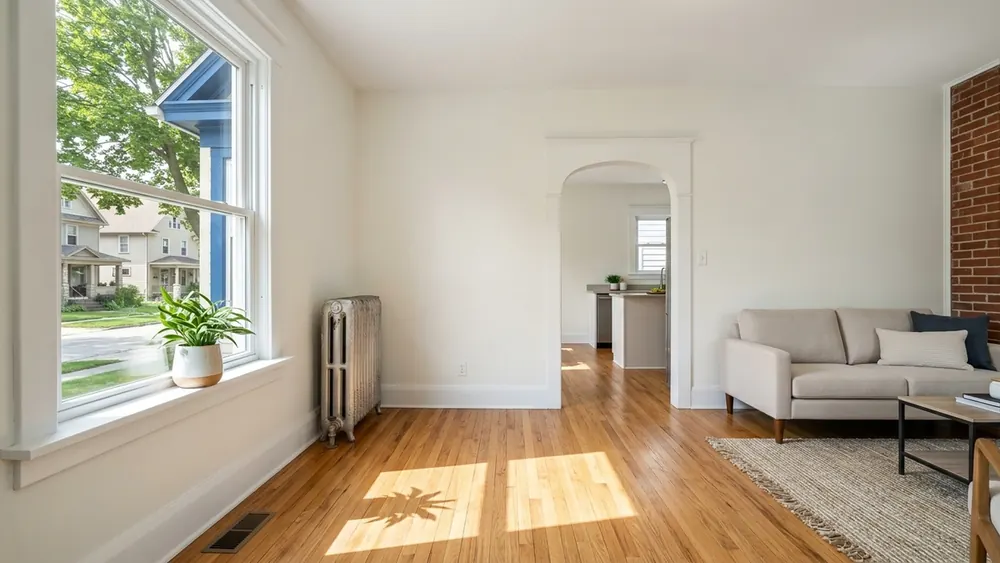
Staging is meant to help you picture a life in a house, and that is fine. Just remember that furniture, lighting and a fresh coat of paint can make rooms feel bigger, brighter and newer than they are. Try to picture each room empty. Ask yourself where your own furniture would go, where the light comes from at the times you would actually be home, and whether the layout fits how you live. Stand in the kitchen, the entry and the main living space for a moment and imagine an ordinary weekday morning there.
Fresh paint deserves a second look, not suspicion. Say you toured a house with a freshly painted basement. That could simply be a seller who freshened things up before listing. It could also be covering something worth knowing about. You do not have to guess which. Write it down, ask what the seller has shared in the disclosures, and make sure the inspection looks closely at that area.
The same goes for anything that feels too finished in one spot and tired everywhere else. A new kitchen in a house with an older roof is common and not a problem by itself. It just means your budget conversation should include the parts of the house that were not updated. Knowing that before an offer is far better than learning it after you have moved in.
Questions worth asking while you are there
A showing is a good time to ask questions out loud, even ones that feel small. What stays with the house? Which appliances are included? Has the seller shared disclosures yet, and what do they mention? Are there any known repairs, updates or permits the seller can point to? Some answers will come later in the paperwork, but asking early tells you what to look for when it arrives. Write each answer next to the question so nothing gets lost.
Some questions belong to other people, and that is a good thing to know up front. Whether a crack is a concern is a question for a licensed home inspector. Whether a payment fits your budget is a question for a lender. What a line in the offer means legally is a question for a Wisconsin real estate attorney. The real estate side, and walking through the paperwork line by line, is where Emily comes in.
I would rather you leave a showing with a page of honest questions than one rushed decision. Write down everything you notice, and we will go through each one together before you sign anything.
How a first home search around Sheboygan changes things
If your search covers Sheboygan along with towns such as Sheboygan Falls, Plymouth or Kiel, try to tour homes on the same terms in each place. Use the same notes, the same questions and the same list of must haves. That makes the comparison about the homes and your routine, rather than about which showing happened to feel nicest on a given afternoon. Local services and rules are worth checking directly with each city or village.
A wider search also means more showings, and more chances to feel rushed. It is fine to say a home is not right, and it is fine to ask for a second look before deciding. An honest, calm opinion on each house is part of how Emily works on the real estate side: what looks promising, what raises a question and what might not fit the needs you described.
What to do after the showing
Before the day ends, sort your notes for each home into three groups: things you loved, things to ask about, and things that would need work. Look at the photos while your memory is fresh. If a house stays on the list, the questions you wrote down become the starting point for a second visit, a talk about an offer, or a list for a licensed home inspector if you move forward. Homes you ruled out are worth a line too, because knowing why a house missed helps the next search.
Before a first conversation, it helps to gather a few things. Bring your must haves and nice to haves, any notes from showings you have already done, and a sense of the timing you are hoping for. If you have already spoken with a lender, bring what you learned about your budget. If not, that is a good early step, because budget questions belong with a lender rather than guesswork. A short list of questions you already have is just as useful.
If you are starting a first home search in Sheboygan or the Tri-County area and want someone to explain each step plainly, bring your questions to Emily. There is no pressure to decide anything on a first call. The goal is simple: you understand what you are looking at, you know which questions to take to which professional, and you make each decision when you feel ready.
This article is general information about buying and selling homes in the Tri-County area (Calumet, Manitowoc and Sheboygan Counties), Wisconsin. It is not legal, probate, tax, lending or inspection advice and does not predict prices or promise results. Confirm contract and disclosure questions with a Wisconsin real estate attorney, probate and tax questions with an attorney or tax professional, financing with a lender, and property condition with a licensed home inspector. Emily Matthews, RE/MAX Universal Realty.

Written by